
Quick Answer
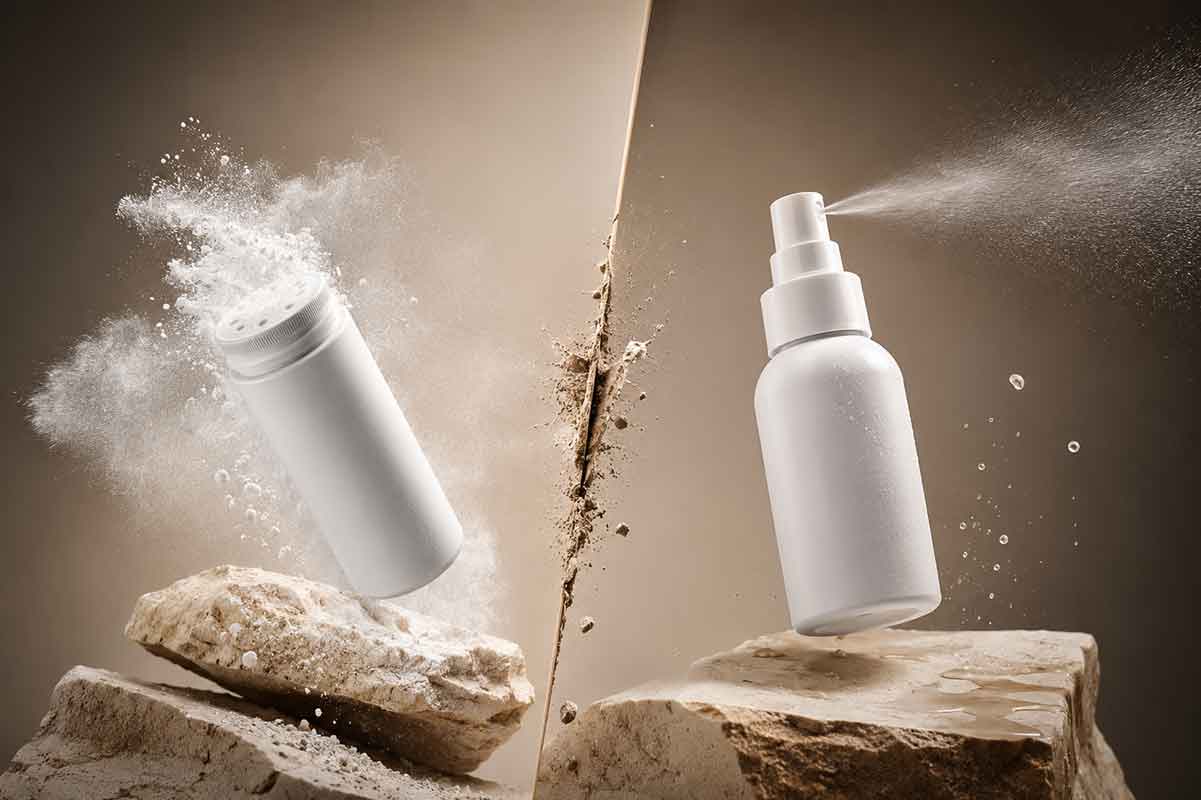
Texture powder wins for root lift, all-day grip, and second-day hair, especially on fine or flat hair that needs structure without weight. Texture spray wins for mid-length and end texture, beachy movement, and a lighter, more flexible finish, especially on wavy or thick hair. Neither one is universally better. They solve different problems: powder builds volume at the root, spray adds texture through the lengths. Most people who "can't decide" actually need both, used in different spots.
Why This Comparison Keeps Coming Up
Every few months, "texture powder vs texture spray" spikes as a search again, usually right after someone watches a styling tutorial that uses one and assumes it replaces the other. It doesn't. They're built around different mechanics, and mixing them up is the single biggest reason people say a product "didn't work" when the real issue was using the wrong tool for the job.
This guide breaks both down: what they're made of, how they actually behave on hair, which hair types each one suits, and what dermatologists say about the scalp side of things that most product pages skip entirely.
What Texture Powder Actually Is
Texture powder is a finely milled, typically talc-free formula built around ingredients like silica, corn starch, kaolin clay, and mica. These particles are small enough to cling to individual strands but rough enough to create friction between them.
That friction is the entire mechanism. When you dust powder onto dry roots, the particles wedge between hair strands and physically separate them, which reads visually as volume and texture. At the same time, silica and starch absorb surface oil, which is why powder is so effective on second-day or third-day hair, and why it's often grouped with dry shampoo in ingredient lists.
Key characteristics:
- Applied to dry hair only. On wet or damp hair, the particles clump instead of separating strands.
- Concentrated at the roots, where it provides the most lift.
- Delivers a matte, gritty finish with strong, reworkable hold.
- A little goes a long way. A pinch the size of a pencil eraser per section is the standard professional guidance, and over-application is the most common mistake.
- Best suited to fine, flat, or oily hair that needs structure without added weight.
Because the hold comes from mechanical friction rather than a film-forming polymer, texture powder tends to feel "grippier" and more reworkable throughout the day than spray-based products, which is why hairstylists reach for it before updos, braids, and any style that needs to stay put without looking stiff.
What Texture Spray Actually Is
Texture spray is a broader category than most people realize. It usually falls into one of two types:
- Sea salt spray — uses actual sodium chloride (sea salt) dissolved in a water or alcohol base to roughen the hair cuticle slightly, mimicking the effect of ocean water and sun on hair.
- Dry or aerosol texture spray — delivers the same base ingredients as texture powder (starches, silica) but suspended in a liquid or aerosol carrier instead of a loose powder.
Both types are applied through the mid-lengths and ends, not concentrated at the root, which makes them better suited to enhancing movement and separation through the length of the hair rather than building volume at the base.
Key characteristics:
- Can be applied to damp or dry hair, depending on formula. Salt sprays are often used on damp hair to encourage natural wave; aerosol powders are typically used dry.
- Distributes evenly through mid-lengths and ends, rather than concentrating at the roots.
- Delivers a lighter, more flexible finish with less visible residue than powder.
- Salt-based versions can be drying with frequent use, since salt draws moisture out of the hair shaft.
- Best suited to wavy, curly, or fine-to-medium hair that needs shape and movement rather than root lift.
If texture powder's job is grip and structure, texture spray's job is looseness and flow. That's the entire distinction in one sentence, and it's the one most comparison articles bury under filler.
Texture Powder vs. Texture Spray: Side-by-Side
| Factor | Texture Powder | Texture Spray |
|---|---|---|
| Primary placement | Roots | Mid-lengths and ends |
| Application state | Dry hair only | Damp or dry, depending on type |
| Finish | Matte, gritty, dry | Lighter, satin-to-matte, flexible |
| Hold strength | Strong, reworkable | Light to medium |
| Best for | Fine, flat, oily hair | Wavy, curly, thick hair |
| Oil absorption | High (functions like dry shampoo) | Low to moderate (salt sprays don't absorb oil) |
| Visible residue | More noticeable if overused | Minimal |
| Common format | Loose or pressed powder, shaker jar | Pump spray or aerosol can |
| Environmental factors | None (no propellant) | Aerosol versions use flammable propellants (butane, propane, isobutane) |
Which One Is Better for Your Hair Type?
Fine or thin hair: Texture powder is the better starting point. It builds volume at the root without the weight that liquid-based sprays can add, and the oil-absorbing effect keeps flat hair looking fresher for longer between washes.
Thick or coarse hair: Texture powder still helps at the root, but many people with thick hair find they don't need extra root lift, in which case a texture spray through the mid-lengths gives shape without adding bulk.
Wavy or curly hair: Texture spray, especially sea salt formulas, tends to work with the hair's existing pattern rather than fighting it, enhancing natural movement instead of flattening it.
Oily scalp: Texture powder does double duty here, since the same particles that create grip also absorb sebum, functionally extending the life of a blowout or style.
Color-treated or dry hair: Texture spray formulas with added moisturizing agents tend to be gentler than powder, which can sit heavier on strands that are already compromised.
Second-day or third-day hair: Texture powder is purpose-built for this. Its oil-absorbing mechanism is essentially the same one used in dry shampoo, just formulated for texture and hold rather than pure refresh.
How to Use Each One Correctly
Texture powder, step by step:
- Start with completely dry hair. Damp hair causes the powder to clump instead of separating strands.
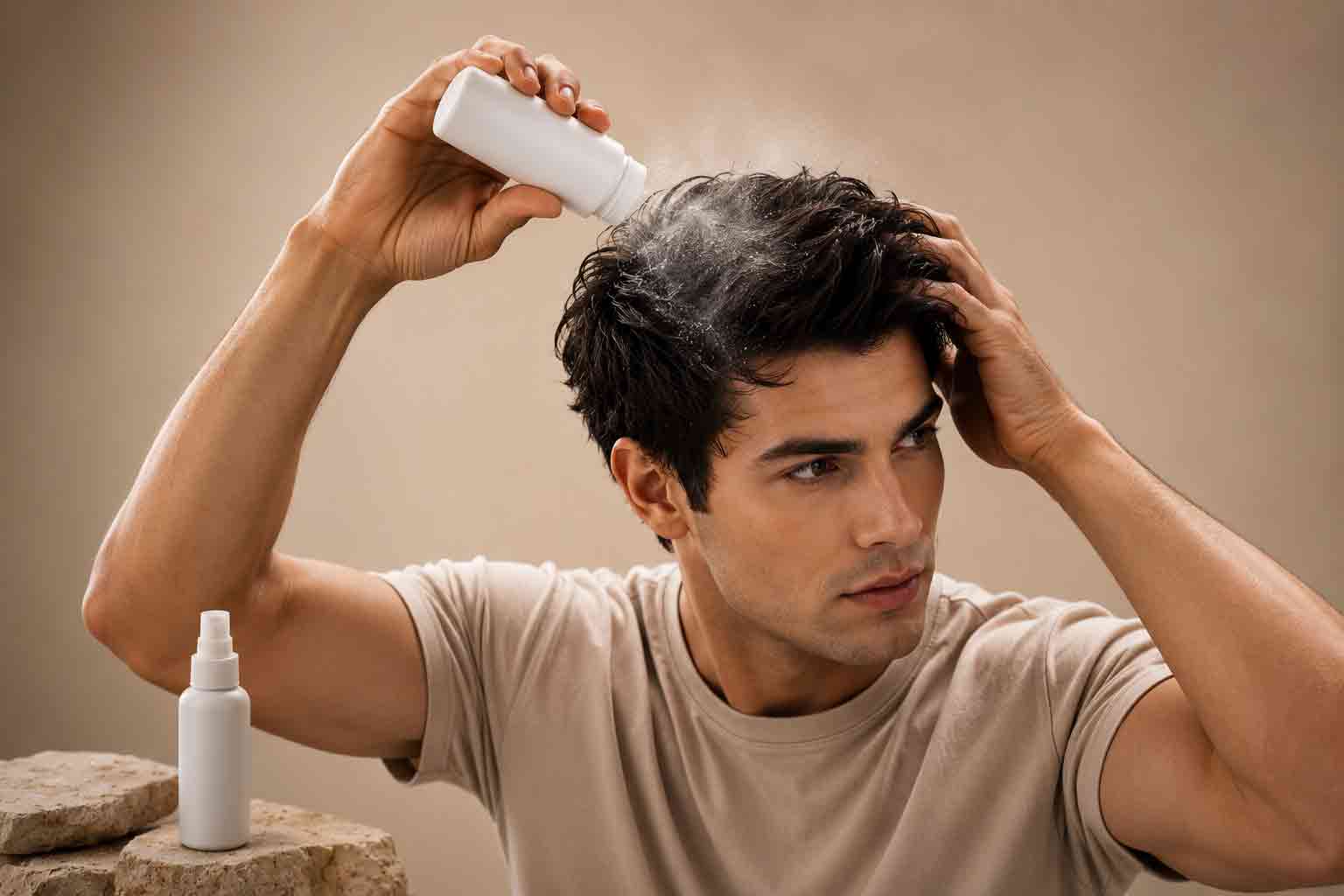
- Section the hair and apply a small amount directly to the roots, roughly a pencil-eraser-sized amount per section.
- Massage in with fingertips, working from the roots outward.
- Avoid running a fine-tooth comb through it. Powder adds friction, so a comb will snag rather than glide.
- Wash out within one to two days to avoid buildup at the scalp.
Texture spray, step by step:
- Hold the bottle 8 to 10 inches from the head and mist evenly through the mid-lengths and ends, avoiding the roots unless the formula is specifically designed for root lift.
- For sea salt sprays, apply to damp hair and air-dry or diffuse for the most natural wave enhancement.
- Scrunch or twist sections while the product is still slightly damp to encourage texture as it dries.
- For aerosol dry-texture sprays, apply to dry hair for an immediate matte finish similar to powder, but with lighter distribution.
The Scalp Health Question Nobody's Marketing Team Wants to Answer
Here's the part most product pages skip: both categories can contribute to scalp buildup if they're overused or not washed out regularly, because the underlying mechanism, in both cases, is a fine particulate that binds to natural oil.
Dermatologists commonly note that these absorbent powders, whether delivered loose or through an aerosol, sit on the scalp and can mix with sebum and dead skin cells over time. Left unwashed, that combination can clog follicles and contribute to irritation, though the clinical evidence linking this specifically to hair loss remains limited and largely extrapolated from broader research on scalp inflammation.
The practical guidance that comes up consistently across dermatology sources:
- Use texture powder or texture spray no more than two to four times per week, not daily.
- Wash it out within one to two days rather than layering fresh product over old.
- Choose fragrance-free formulas if you have a sensitive scalp, eczema, or dandruff.
- Watch for persistent itching, redness, or flaking, and see a dermatologist if it doesn't resolve after cutting back.
- A clarifying shampoo used occasionally, not weekly, can help clear buildup without over-drying the scalp.
One meaningful difference between the two categories: aerosol texture sprays carry an additional consideration that loose powders don't. Most aerosol formulas rely on hydrocarbon propellants, typically butane, propane, or isobutane, to dispense the product as a fine mist. These propellants are flammable and classified as volatile organic compounds, which is why aerosol sprays carry flammability warnings that pump sprays and loose powders don't. It's a minor everyday risk, but it's worth knowing if you're storing product near heat tools or an open flame.
Cost and Longevity
Texture powder is typically the more economical option per use. Because the effective dose is so small, a single container can last significantly longer than a spray bottle of comparable size, and there's no propellant or liquid carrier taking up volume that isn't active ingredient.
Texture spray, particularly aerosol versions, tends to be consumed faster per application since even light coverage across mid-lengths and ends uses more product by volume than a root-only powder application.
Can You Use Both Together?
Yes, and for a lot of hair types, this is the actual answer to "which is better." A common professional approach is to apply texture powder at the roots for lift and grip, then use a texture spray through the mid-lengths and ends for movement and separation. Used this way, the two products aren't competing, they're covering different sections of the same hairstyle.
The one combination to avoid: applying powder over freshly sprayed, still-damp hair. The moisture will cause the powder to clump rather than separate strands, undoing the texture you're trying to build.
Frequently Asked Questions
Is texture powder better than texture spray?
Neither is universally better. Texture powder is better for root volume, grip, and oil absorption. Texture spray is better for mid-length movement, lighter hold, and enhancing natural wave. The right choice depends on where on the hair you need texture and what your hair type responds to.
Can I use texture powder and texture spray at the same time?
Yes. A common approach is powder at the roots for lift and spray through the mid-lengths and ends for movement, applied separately rather than layered on the same damp section.
Does texture powder cause hair loss?
No robust clinical evidence directly links texture powder to conditions like androgenetic alopecia. The realistic risk is follicular irritation from residue buildup if the product isn't washed out regularly, not permanent hair loss from the powder itself.
Is texture spray bad for your scalp?
Not inherently, but frequent use of salt-based sprays can be drying since salt pulls moisture from the hair shaft, and aerosol versions leave residue similar to dry shampoo if not washed out regularly.
Which is better for fine hair, texture powder or texture spray?
Texture powder. It adds volume and grip at the root without the added weight that a liquid-based spray can bring to fine strands.
Which is better for curly or wavy hair?
Texture spray, particularly sea salt formulas, generally works better with an existing wave or curl pattern, since it enhances natural movement rather than adding root lift the hair doesn't need.
How often should you use texture powder or texture spray?
Dermatology guidance generally recommends two to four times per week, with a full wash-out every one to two days to avoid buildup.
Is aerosol texture spray flammable?
Yes. Most aerosol texture sprays use hydrocarbon propellants such as butane, propane, or isobutane to dispense the product, which are flammable and should be kept away from heat sources and open flame.
Bottom Line
Texture powder and texture spray aren't competing products, they're specialized tools for different parts of the same head of hair. Powder builds root volume and grip on hair that needs structure. Spray adds movement and separation through the lengths on hair that needs flow. Pick based on where you need the texture, not which one has better marketing.

Leave a comment
This site is protected by hCaptcha and the hCaptcha Privacy Policy and Terms of Service apply.