
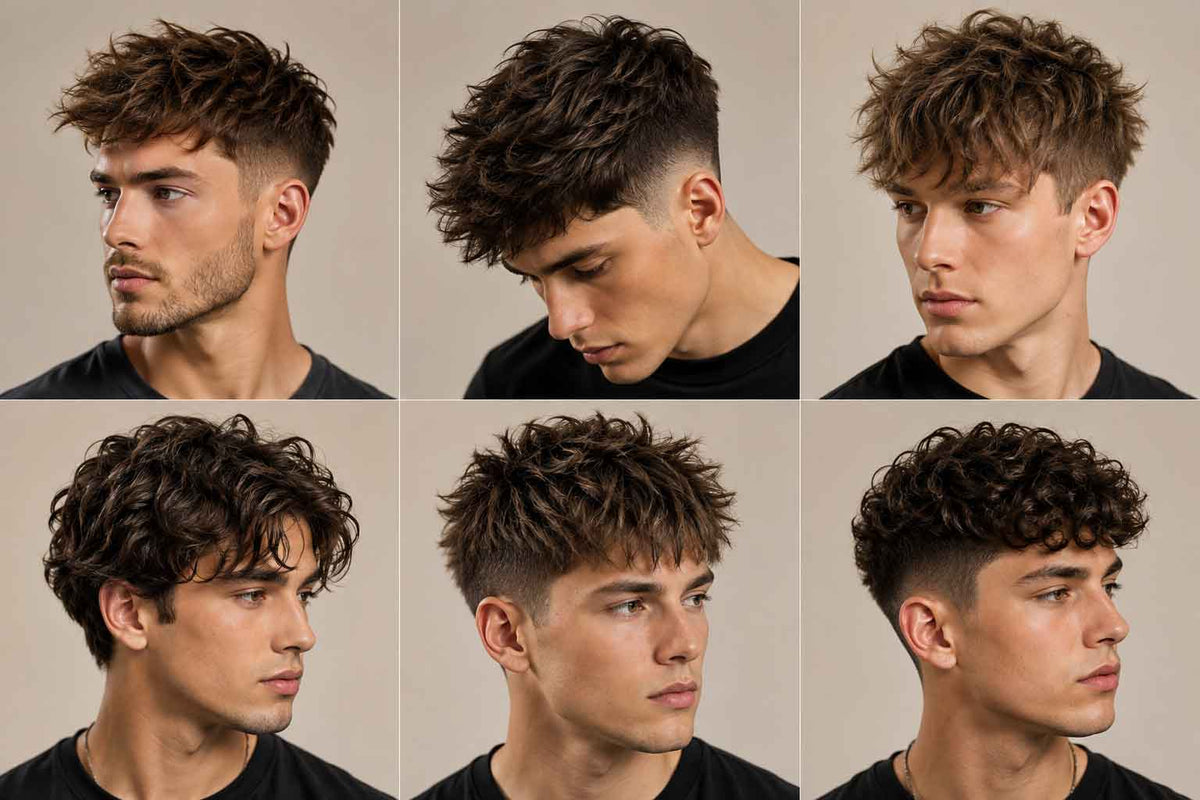
Fine, flat, or thinning hair benefits the most from texture powder, though the product works to some degree on nearly every hair type except very short buzzed styles. If your hair collapses by midday, resists volume no matter what you spray into it, or looks limp within an hour of leaving the shower, texture powder solves a problem that creams, gels, and pomades were never built to solve.
This guide breaks down exactly why fine and flat hair responds so well to texture powder, how other hair types (thick, curly, coily, thinning, and short) fare with it, the science behind why it works, and how to apply it correctly for your specific hair so you don't end up with the chalky, dry-shampoo look nobody wants.
What Texture Powder Actually Is
Texture powder is a lightweight, dry styling product, usually silica-based, that you shake directly onto dry hair to create volume, grip, and a matte finish. Unlike waxes and pomades, it does not coat the strand in oils or resins. The fine powder creates friction that leaves space between individual strands, resulting in a light-hold product that gives the impression of added volume while letting hair move naturally.
The active ingredient doing most of the work is silica silylate, sometimes paired with clay or starch derivatives depending on the brand. Unlike silicones such as dimethicone that leave a smooth, shiny film on hair, silica is a rough particulate that gives a matte look and helps "bulk up" the hair by increasing friction between hair fibers, according to cosmetic chemist Randy Schueller. That friction is the entire mechanism. It is not a coating product, it is a texturizing one, and that distinction is exactly why hair type matters so much when you decide whether to use it.
Why Fine and Flat Hair Is the Best Match
Fine hair has a smaller strand diameter than medium or coarse hair, which means it has less structural weight to fight against gravity in the first place. Cream and oil-based products only make this worse: even a small amount feels heavy on thin strands, flattening the very volume you were trying to build.
Individual fine strands are thinner than a sewing thread when held to light, and are more susceptible to product buildup, meaning a small amount of any product feels heavier on fine hair than it would on thicker hair. This is precisely the problem texture powder was designed to solve. Texture powder was primarily designed for this hair type, because volume and lift are difficult to achieve with liquid or cream products, but a dry powder that creates friction without weight addresses this directly.
Hair Care Brands across the men's and women's grooming space consistently point to the same conclusion. Styling powder is ideal for fine or thinning hair because it delivers lift without oil, and applying a small amount at the roots with a gentle fingertip massage produces fuller-looking hair without heaviness. Suavecito, one of the more established texturizing powder brands, markets its formula specifically around this use case, describing it as best for adding volume and grip to fine hair because the super-fine powder absorbs oils that would otherwise weigh hair down.
The mechanism explains the marketing. Because texture powder adds almost no mass to the strand, it can lift hair at the root without the strand collapsing back down under its own weight, which is the exact failure point of mousse, cream, and most volumizing sprays on fine hair.
Thinning Hair Gets a Secondary Benefit
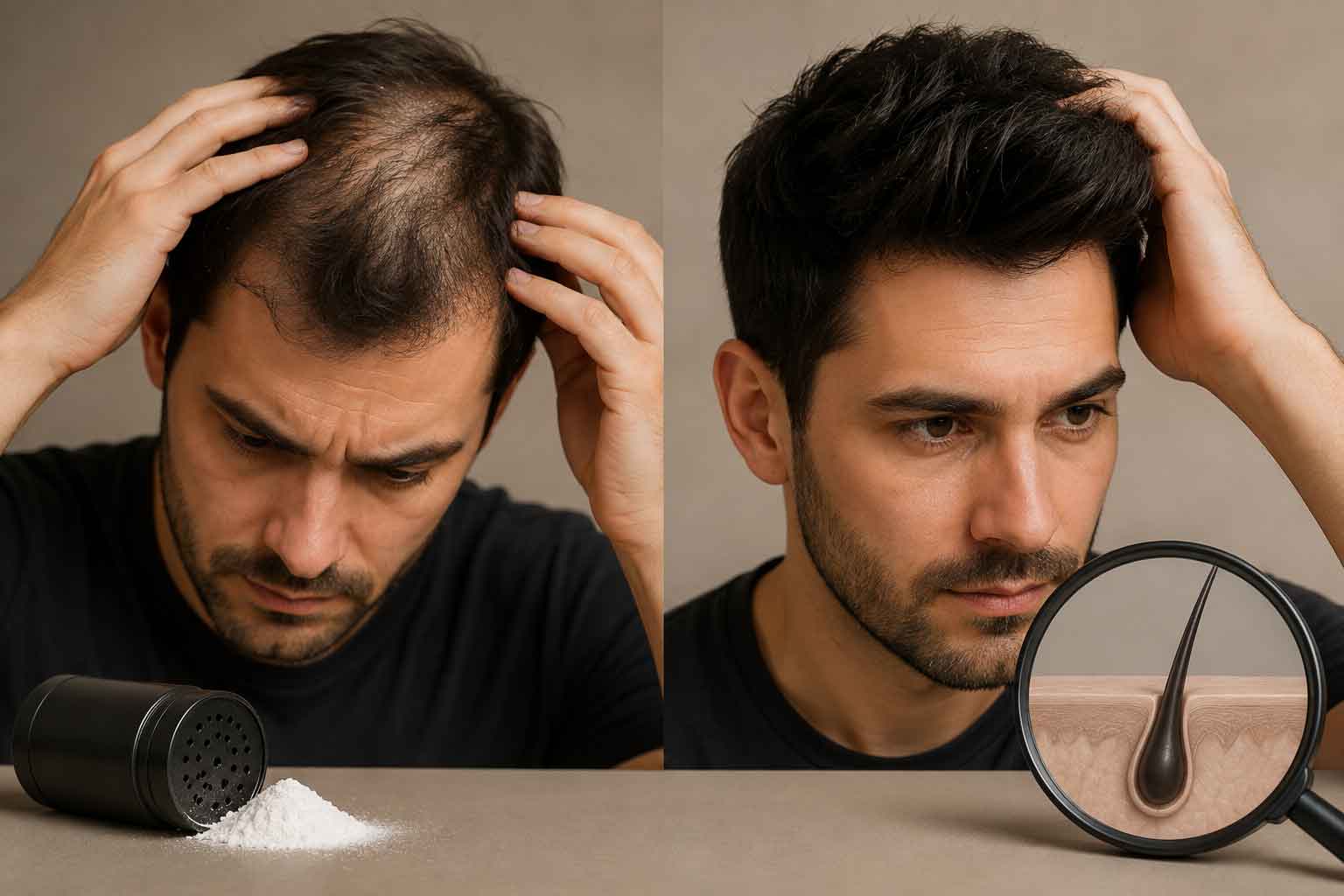
Thinning hair (which is different from naturally fine hair, though the two often overlap) gets an additional benefit from texture powder: coverage. For thinning hair specifically, focusing application on the crown and parting creates a fuller appearance by disguising the visible scalp that shows through sparse areas. The friction effect separates the remaining strands so they take up more visual space, which is a similar principle to how root-touch-up powders work for covering gray, just applied for volume rather than color.
How Other Hair Types Respond to Texture Powder
Fine hair is the best-suited category, but it is not the only one that benefits. Here is how texture powder performs across the rest of the spectrum.
Medium Hair
Hair with a strand diameter between fine and coarse behaves predictably with most styling products and can accommodate more product than fine hair without becoming weighed down, though it still benefits from the lifting effect of texture powder when flatness or lack of grip is the concern. Medium hair is essentially the forgiving middle ground. It won't get the dramatic lift that fine hair sees, but it also won't turn chalky or overloaded as easily, giving you more room to experiment with placement and amount.
Thick and Coarse Hair
Thick, coarse strands already have natural body, so texture powder plays a different role here. Instead of creating volume from nothing, it's used to manage bulk and add grip for definition. Uppercut Deluxe's styling guide recommends using powder at the roots and lightly through the mid-lengths on thick hair specifically to reduce bulk rather than add to it. Coarse strands are visibly thicker, feel stronger between the fingers, hold products well, and are less susceptible to buildup, so texture powder can still add grip and definition, but the effect is less transformative than on fine hair because the strands already provide natural separation and body.
In practice, this means coarse hair users often reach for texture powder to break up an overly uniform, "helmet" look rather than to fight flatness.
Curly, Wavy, and Coily Hair
Texture powder has a legitimate place in curly and coily routines, but the application logic flips. For curly hair, using powder lightly on dry curls adds volume without stiffness, and long, curly styles benefit from powder applied at the roots with light scrunching through the mid-lengths, since powder adds grip between waves and curls, which reduces the frizz and clumping that can make longer curly hair look shapeless.
The caution here is length and gravity. On long hair, the weight of the lengths can work against the product if it's applied in the wrong place or overused, so the fix is to focus almost all of the powder at the roots rather than distributing it through the lengths, because fine long hair is already fighting gravity and adding weight through the lengths with powder only makes that worse. Curl pattern doesn't cancel out strand diameter. Fine, curly hair should still be treated like fine hair first.
Short Hair and Cropped Styles
Short styles are where texture powder is most associated in the men's grooming world, largely because the effect is immediate and visible. Uppercut Deluxe's powder in particular excels on short to medium hair for messy quiffs, textured crops, and everyday cuts that need volume without weight. Because there's less length for gravity to pull down, even a small amount of powder at the root creates a visible, all-day lift.
Very Short Buzzed Hair
The one category where texture powder essentially does nothing is buzzed or clipper-cut hair under roughly a quarter inch. There isn't enough strand length for the powder to create meaningful friction or separation, so most users in this category skip it entirely in favor of scalp-focused products.
The Science: Why Powder Beats Cream for Volume
The volumizing effect of texture powder comes down to two combined actions rather than one.
Friction and separation. Silica silylate creates friction and separates strands, leaving hair looking thicker and fuller, and it also helps lift hair at the root, moving it away from the scalp for an instant volume boost. This is a purely mechanical effect. The rough, irregular particle shape of silica silylate physically prevents strands from lying flat against each other, which is the opposite of what a smooth silicone or oil does.
Oil absorption. Silica silylate is a jack-of-all-trades ingredient that can improve slip, reduce clumping, and absorb oils while also acting as a bulking agent. By soaking up the natural sebum that weighs hair down over the course of a day, the powder does double duty as a light dry shampoo, which is part of why so many brands market it as a way to extend the gap between washes.
Together, these two mechanisms explain why texture powder consistently outperforms cream and liquid volumizers on fine hair specifically: it adds structure without adding mass, and it actively removes the oil that causes flatness instead of contributing more moisture to the problem.
Is Texture Powder Safe for Your Hair and Scalp?
Given how central silica silylate is to these formulas, it's worth answering the safety question directly, since it comes up often in reviews and forums.
The ingredient has been formally reviewed by the Cosmetic Ingredient Review (CIR) Expert Panel, the independent body that assesses cosmetic ingredient safety in the United States. The Expert Panel found that silica silylate and related siloxysilicates are stable solids that are not soluble in water and are therefore not likely to penetrate the skin, did not cause adverse effects in testing, were not genotoxic or carcinogenic, and did not result in significant irritation or sensitization when applied dermally. Based on its review of available animal and clinical data, the panel concluded that silica silylate and the related surface-modified siloxysilicates are safe as used and formulated in cosmetic products.
That said, "safe" doesn't mean "consequence-free with unlimited use." The most commonly reported downside isn't toxicity, it's simple buildup. Because the product is designed to sit in the hair and absorb oil rather than rinse out, skipping washes for too long defeats the purpose. Powder accumulates with daily use, and after a few applications without washing it starts working against you, creating a heavy, dull coating that actually reduces volume, which is why it should be washed out thoroughly every two to three days.
For people with an already dry or flake-prone scalp, it's also worth introducing the product gradually rather than applying a heavy dose on day one, since the oil-absorbing property that makes it effective for volume is the same property that can tip a dry scalp toward feeling drier if it's overused.
How to Apply Texture Powder Based on Your Hair Type
Getting the technique right matters as much as picking the right product, and the correct approach changes depending on which category above you fall into.
- Fine or thinning hair: Apply at the roots only, in small amounts, and work in with fingertips rather than a comb. Focus extra product on the crown and parting if coverage is the goal.
- Medium hair: Apply at the roots for lift, then lightly through the mid-lengths if you want texture along the length as well as volume at the base.
- Thick or coarse hair: Use at the roots and sparingly through the mid-lengths specifically to break up bulk and add definition, not to add more body.
- Curly or wavy hair: Apply lightly to dry curls, concentrating at the roots, and avoid working it heavily through the lengths on longer styles.
- Long hair of any texture: Keep the vast majority of the product at the roots. Applying through the lengths on fine, long hair adds weight that works against you, since fine long hair is already fighting gravity.
A few universal rules apply regardless of hair type. Texture powder works best when hair is completely dry, and it should always be applied sparingly, since it's far easier to add more than to remove excess. The recommended technique is to sprinkle it directly into the hair rather than onto your hands first, then use your hands to style it in afterward, since applying it to your palms first tends to make it harder to work with and messier to distribute evenly.
Texture Powder vs. Other Volumizing Products
It's worth understanding where texture powder sits relative to the products people typically reach for first, since the comparison clarifies why hair type steers the decision so strongly.
Volumizing mousses and root-lifting sprays rely on polymers that stiffen as they dry, which can create a crunchy or sticky feel, particularly problematic on fine hair where any added weight is noticeable immediately. Dry shampoo shares some overlap with texture powder, since both absorb oil, but dry shampoo is formulated primarily for oil control and visible residue is far more common, especially on darker hair colors. Volumizing dry shampoos can cause a noticeable buildup of white powder along the roots, which is particularly unwelcome for people with thin hair who are already trying to minimize how much product shows. Texture powder, by contrast, is milled specifically to disappear visually while still doing the mechanical work of separation.
Clays and pomades sit at the opposite end of the spectrum. They rely on weight and tack to hold a shape, which works well on thick or coarse hair that can absorb that mass without going flat, but is the wrong tool for fine hair chasing volume, since the added weight collapses the exact lift the person is trying to create.
Frequently Asked Questions
Can texture powder work on colored or chemically treated hair?
Yes. Since the product sits on the surface of the strand rather than penetrating it, it doesn't interact with hair color or chemical treatments. The main consideration for color-treated hair is the same as for any hair type: wash it out regularly to avoid buildup dulling the color's shine.
Will texture powder make hair look dry or dusty?
Only if it's overapplied or not worked in properly. Leaving powder sitting on the surface instead of massaging it in is what causes a chalky, grey-looking cast, especially on dark hair. Starting with a small amount and building up avoids this almost entirely.
Is texture powder the same as dry shampoo?
No, though the two share an oil-absorbing mechanism. Dry shampoo is formulated to refresh hair between washes and control oil, while texture powder is built primarily as a styling tool for volume, grip, and hold, with oil absorption as a secondary benefit rather than the main goal.
How often can I use texture powder?
Daily use is generally considered safe based on current cosmetic ingredient safety reviews, but it should be washed out every two to three days to prevent buildup on the scalp and in the hair.
The Bottom Line
Fine, flat, and thinning hair is the category texture powder was built to serve, because it solves the specific problem those hair types face: an inability to hold volume against gravity without adding weight that makes the problem worse. Medium, thick, curly, and short hair types can all use texture powder effectively too, just for slightly different goals, whether that's definition, bulk reduction, or frizz control rather than raw volume. The one hair category it won't do much for is buzzed, clipper-short hair, where there isn't enough strand length for the product's friction-based mechanism to work.
If your hair falls flat by early afternoon no matter what you've tried, texture powder applied sparingly at the roots is worth testing before reaching for another cream or mousse that will only add the weight you're trying to avoid.
Sources
- Fashionista — The Secret to Big Volume and Perfect Texture? A Little Bottle of Powder
- Editorialist — The 15 Best Volumizing Powders for Fine, Thin Hair
- Cosmetics Info (Personal Care Products Council) — Silica Silylate Safety Assessment
-
Journal of the Cosmetic Ingredient Review — Safety Assessment of Silylates and Surface-Modified Siloxysilicates (SAGE Journals)


Leave a comment
This site is protected by hCaptcha and the hCaptcha Privacy Policy and Terms of Service apply.